
Product confirmation
Species, format and batch identified clearly.
Exporting a botanical involves more than a courier booking. This guide explains the steps involved and where a local partner helps.
Exporting Sceletium from South Africa usually involves confirming the product and its legal status, preparing commercial and shipping documents, arranging packaging and freight, and meeting any permit or certificate requirements for the destination.
The exact steps depend on what you are buying, how much, and where it is going. A sourcing partner who works with exporters regularly can map this out before you commit to an order.
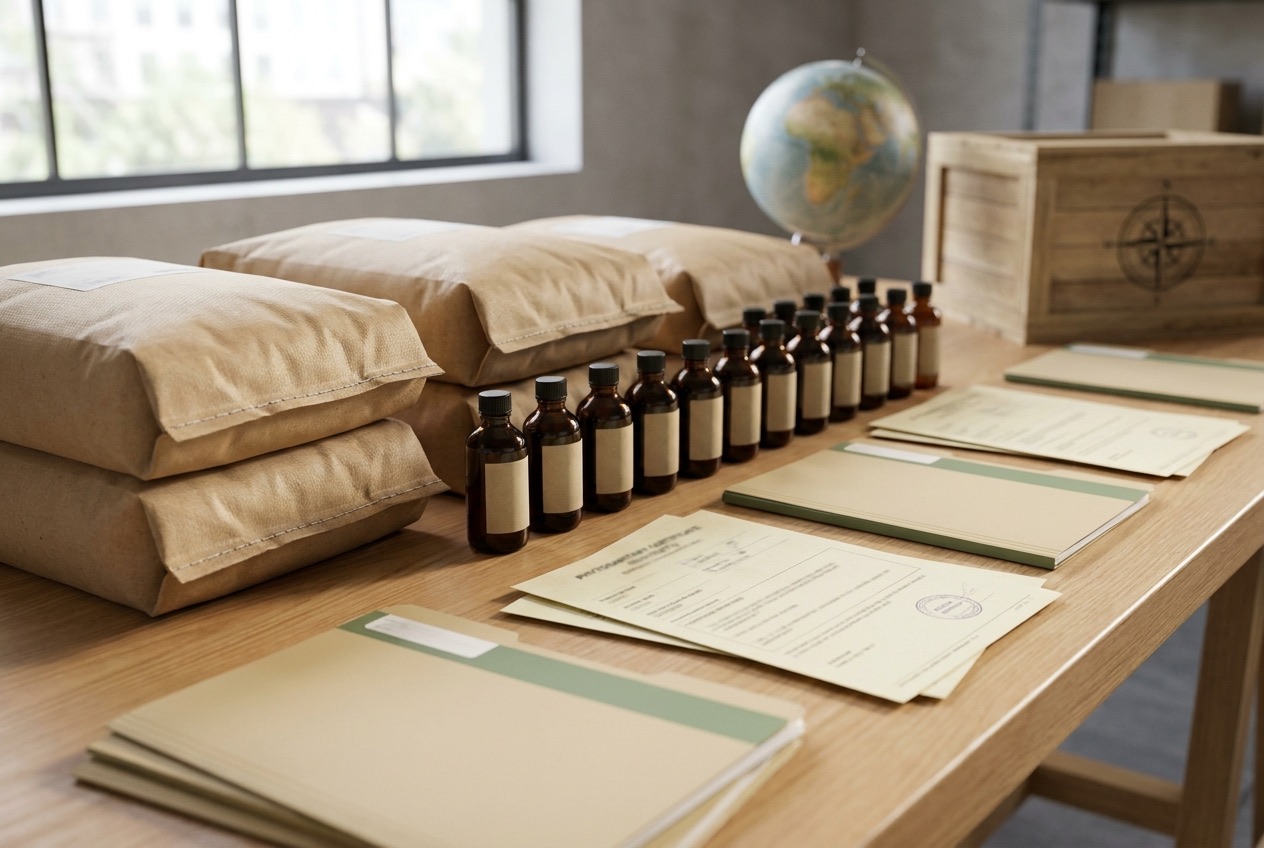
What usually needs to happen for a compliant shipment.
Species, format and batch identified clearly.
Commercial invoice, packing list and any certificates required.
South African rules, such as bioprospecting regulations, may apply depending on use.
Air or sea, packed to protect the product in transit.
The most common problems are mismatched paperwork, unclear product descriptions, and assuming the destination country’s import rules match the exporter’s. Delays at customs are expensive, particularly for time-sensitive botanicals.
Always tell your supplier the destination, intended use and any import permit you hold before the order is finalised. That allows the right documents to be prepared at the start rather than chased at the end. Buyers remain responsible for confirming requirements in their own country.
We can discuss documentation including phytosanitary certification where it is required, depending on the product and destination.
Both are possible. Air suits smaller or urgent orders; sea suits larger volumes.
The buyer is responsible for confirming and meeting import requirements in their own country. We help provide the supporting documents.
Tell us what you are looking for and we will come back with pricing, availability and next steps.